
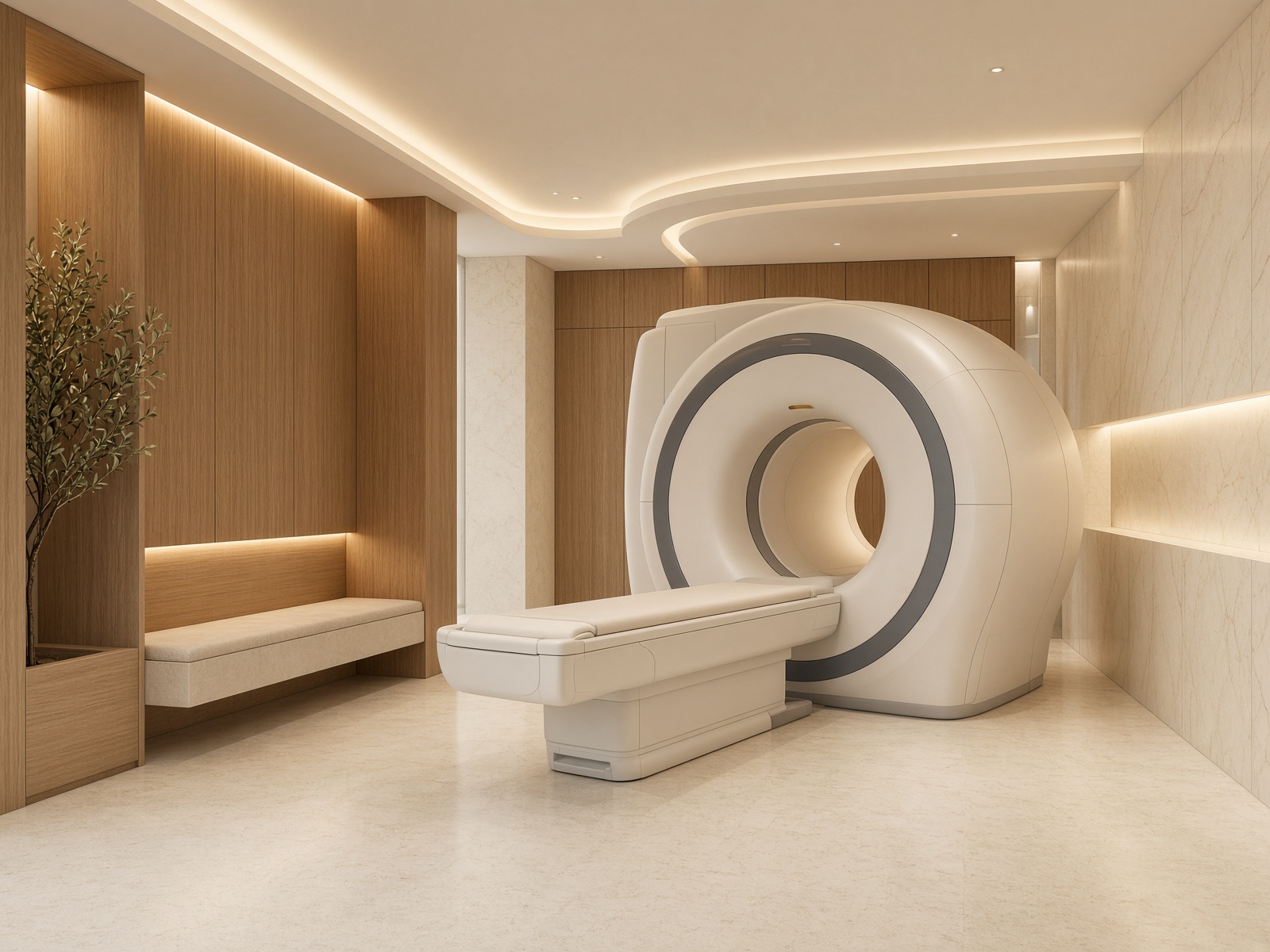
Magnetic resonance imaging scanner

Diagnostics

MRI (magnetic resonance imaging) in Los Cabos

Diagnosis first: a physician confirms MRI is the right test for your question, the imaging team screens you for safety, and you leave with your images and a radiologist's report for your doctors at home. Coordinated at top-level private hospital facilities in Los Cabos, with one concierge from the first message.

Start a confidential case

Part of a full checkup? See the executive health checkup

MRI as part of diagnosis first

An MRI is a tool, not a plan. It is most useful when it answers a specific clinical question: a knee that will not settle, back pain with leg symptoms, a finding on another scan that needs a closer look. Whether you are staying in Cabo San Lucas, San José del Cabo, or along the corridor, the order of steps is the same:

  • You share your question and any prior records, reports, or images
  • A physician reviews them and decides whether MRI is the right test, or whether computed tomography (CT), ultrasound, or another step answers the question better
  • The imaging team completes safety screening before the scan
  • MRI is performed at top-level private hospital facilities in Los Cabos
  • A radiologist (a physician trained to interpret medical images) reads the study and issues a written report
  • You receive your images and the report, plus a written next step from your concierge

If MRI is not the right test, we say so in writing.

MRI, CT scan, or ultrasound: which test answers the question?

MRI (magnetic resonance imaging)

Uses a powerful magnetic field, radio waves, and a computer to produce detailed pictures of organs, soft tissues, joints, the spine, and the brain. MRI does not use x-rays (ionizing radiation).
CT (computed tomography) scan

Uses x-ray technology to produce cross-sectional images. CT is fast, and in emergencies it can show internal injuries and bleeding quickly.

Ultrasound

Uses sound waves to produce pictures, does not use radiation, and is often used to look at internal organs and to guide biopsies.

The right test depends on the question, not on which machine sounds most advanced. Radiologists and referring physicians use evidence-based guidelines, such as the American College of Radiology (ACR) Appropriateness Criteria, to match the imaging test to the clinical situation. Sometimes the best first answer is an ultrasound or a CT scan, and sometimes it is MRI. A physician's order or review decides it.

What to expect on the day

  • Before you travel: We confirm the study requested, any preparation (for example, whether to fast), and your safety-screening answers. Unless your doctor says otherwise, take your regular medications as usual.
  • At the facility: You complete a safety questionnaire, remove jewelry and anything metal, and usually change into a gown. Some clothing contains metallic fibers that cannot go into the scanner.
  • In the scanner: You lie still on a table that moves into the scanner. The machine makes loud tapping and knocking sounds; earplugs or other hearing protection are provided, and the technologist can hear you and talk with you throughout.
  • How long it takes: This depends on the body area and the protocol. Published estimates are about 20 minutes for a knee, about 30 minutes for the brain, and typically 60 to 90 minutes for a whole-body protocol.
  • Afterward: Most people return to their day. If you took a relaxation medication, you need a ride. Your concierge arranges the transfer.

Safety screening: implants, pacemakers, contrast, and claustrophobia

MRI is very safe when safety screening is done properly. Tell us about the items below when you first write, so they are handled before you fly.

Implants, pacemakers, and metal

The MRI magnet pulls on certain metal objects and can cause some devices, such as pacemakers, neurostimulators, and medication pumps, to malfunction. Implanted devices are labeled MR Safe, MR Conditional (safe only under specific scanner conditions), or MR Unsafe. A device whose MRI safety status is unknown is treated as unsafe. If you have any implant, pacemaker, metal fragment, or device, send its name and model (or your implant card) in advance. Most orthopedic implants pose no risk, but the radiology team must know about them.

Contrast (gadolinium)

Some MRI studies use a gadolinium-based contrast agent, injected into a vein, to make certain tissues easier to see. Many studies do not need contrast at all. Gadolinium agents rarely cause allergic reactions. Tell the team if you have kidney disease, a kidney transplant, liver disease, a prior reaction to gadolinium, or might be pregnant, and give the date of any previous MRI with contrast. The U.S. Food and Drug Administration (FDA) reports that trace amounts of gadolinium can remain in the body for months to years. This has not been directly linked to harmful effects in people with normal kidney function. The one known related condition, nephrogenic systemic fibrosis, is rare and occurs in some people who already have kidney failure. The radiologist decides whether contrast is needed and which agent to use.

Claustrophobia and anxiety

Feeling closed in is common. Guidance from RadiologyInfo.org (the American College of Radiology and the Radiological Society of North America) notes that about one in twenty people may need a mild sedative to stay calm. Tell us early. Your physician can discuss a mild sedative, some facilities allow a companion in the scanner room, and knowing what to expect helps. If you take a sedative, you will need a ride; we arrange it.

Pregnancy

If you are or might be pregnant, say so before the scan. The physician and radiologist will decide whether and how to proceed.

Your images and report, for your doctors at home

A scan only helps if your doctors at home can use it.

  • Images as DICOM files. DICOM (Digital Imaging and Communications in Medicine) is the international standard format for medical images. Radiology systems in the US, Canada, and elsewhere can open DICOM files. We request your study as DICOM files, on a disc or by secure electronic transfer depending on the facility, not just screenshots.
  • The radiologist's report in English. We request the written report in English. If the facility issues it in Spanish, we coordinate an English version so your doctors are not working from a guess.
  • A written next step. Your concierge sends a short written summary of what was done and what comes next, so nothing is lost between Los Cabos and home.

Whole-body MRI in Los Cabos: an honest note

Whole-body MRI scans large parts of the body in one session. We can include it in an executive health checkup when it fits your plan after clinical review. But before you book one because you feel fine and want reassurance, here is what professional bodies say:

  • The American College of Radiology (ACR) stated in April 2023 that there is not sufficient evidence to justify recommending total-body screening for people with no symptoms, risk factors, or family history suggesting disease. It added that there is no documented evidence that such screening is cost-efficient or prolongs life, and warned that it can identify numerous non-specific findings that lead to unnecessary follow-up tests, procedures, and expense.
  • The Canadian Association of Radiologists (CAR) (policy statement, June 2025) opposes whole-body MRI as a screening tool in people without symptoms, outside specific evidence-based indications. It notes that screening scans are generalized, while diagnostic MRI is tailored to a specific question.
  • Incidental findings are common. A 2026 evidence summary of systematic reviews (Tools for Practice #410) reported that about 94% of people without symptoms who had a whole-body MRI had at least one finding, up to 30% needed further investigation, and 1.1% to 1.6% had a confirmed cancer. No data show whether these scans reduce deaths.

What this means at One Stop Cabo Health:

  • If you have a symptom or a specific concern, a targeted MRI of that area, chosen by a physician, is usually the more useful test.
  • If you choose whole-body MRI as part of a checkup, we set expectations in writing first: what it can and cannot show, and how any incidental finding would be followed up.
  • Whole-body MRI does not replace proven screening tests your doctor recommends, such as mammography or colorectal screening.

More on early detection after 40

If you are coming from Canada

The Fraser Institute's Waiting Your Turn 2025 physician survey reported a national median wait of 18.1 weeks for an MRI scan in 2025, up from 16.2 weeks in 2024. Waits vary by province.

  • Bring what you have: your requisition or referral, prior reports, and images, so the physician review can start before you travel.
  • Private and self-paid: MRI coordinated in Los Cabos is private care, paid by you. Ask your provincial plan and any private insurer about coverage before you travel. Coverage is never assumed. We provide itemized records on request.
  • Back home: your family physician or specialist receives the DICOM images and the report, so your care can continue in Canada.

If you are coming from the United States

Some US patients choose to pay privately for imaging, for example because of a high deductible or plan limits, or to get an answer on their own schedule.

  • Cash-pay, in writing: MRI coordinated in Los Cabos is private, self-paid care. Cost information for your specific study is shared in writing before you commit. We are not an in-network billing office for US insurers. If your plan reimburses care abroad, that is between you and your insurer; we can provide itemized records.
  • Second read, either direction: because you receive DICOM files and the full report, your radiologist or specialist at home can do their own review (a "second read"). If you already have a recent MRI from home, send it. The physician review may show that you need a different study, or none at all, rather than a repeat scan.
  • Back home: the images and the English report go to the physician who will act on them.

If the MRI finds something

Diagnosis first means the scan leads somewhere. If findings need tissue confirmation, the next step may be an image-guided biopsy. If they point toward an operation, the next written step is a pre-surgical evaluation, with the same concierge.

Pre-surgical evaluation·Executive health checkup

FAQ

Frequently asked questions

Do I need a doctor's order for an MRI in Los Cabos?+

A physician decides whether magnetic resonance imaging (MRI) is the right test. If you have an order, referral, or prior records, send them. If you do not, describe your question and a physician reviews it as part of your plan. Sometimes the answer is a different test, and we say so in writing.

Is an MRI better than a CT scan or an ultrasound?+

Not in general. It depends on the question. Magnetic resonance imaging (MRI) shows soft tissues, joints, the spine, and the brain in detail without x-rays. A computed tomography (CT) scan is fast and is often used in emergencies. Ultrasound uses sound waves and is often a first look at internal organs. A physician matches the test to your situation.

Will I need contrast (gadolinium), and is it safe?+

Many magnetic resonance imaging (MRI) studies do not need contrast. When they do, a gadolinium-based agent is injected into a vein, and allergic reactions are rare. The U.S. Food and Drug Administration (FDA) reports that trace gadolinium can remain in the body for months to years but has not been directly linked to harm in people with normal kidney function. Tell the team about kidney or liver disease, past reactions, pregnancy, and prior contrast scans.

Can I have an MRI with a pacemaker or a metal implant?+

Sometimes. It depends on the device. Implants are labeled MR Safe, MR Conditional (safe only under specific conditions), or MR Unsafe, and a device with unknown status is treated as unsafe. Send the device name and model, or your implant card, before you travel so the radiology team can confirm before you fly. Most orthopedic implants pose no risk, but the team must know about them.

What if I am claustrophobic?+

Tell us early. Many people feel closed in, and about one in twenty may need a mild sedative to stay calm, according to RadiologyInfo.org. Your physician can discuss options, some facilities allow a companion in the room, and you can talk with the technologist throughout. If you take a sedative, you need a ride; we arrange it.

Will I get my images and an English report to take home?+

Yes, that is part of the plan. We request your images as DICOM (Digital Imaging and Communications in Medicine) files, the standard format radiology systems use, and the radiologist's written report in English. If the original report is in Spanish, we coordinate an English version. Your doctors at home can then review the study themselves.

Should I get a whole-body MRI if I feel fine?+

Talk it through first. The American College of Radiology (ACR) and the Canadian Association of Radiologists (CAR) do not recommend whole-body magnetic resonance imaging (MRI) as screening for people without symptoms or specific risk factors, mainly because incidental findings are common and no benefit in prolonging life has been shown. If you choose it as part of a checkup, we set expectations in writing first.

Related guides

This page is education and service information only. It is not medical advice, a diagnosis, or a substitute for care from a licensed physician. One Stop Cabo Health is a medical concierge and coordinator, not a hospital or imaging center. Imaging and clinical care are provided by licensed physicians and radiologists at top-level private hospital facilities in Los Cabos, under their own professional responsibility. Whether an MRI is appropriate, and whether contrast or sedation is used, is decided by those clinicians. No outcome is guaranteed.

Sources

  1. 1. American College of Radiology (ACR). ACR Statement on Screening Total Body MRI, April 17, 2023. https://www.acr.org/News-and-Publications/Media-Center/2023/ACR-Statement-on-Screening-Total-Body-MRI
  2. 2. Canadian Association of Radiologists (CAR). Policy Statement: Whole Body MRI Screening in Asymptomatic Individuals, approved June 2025. https://car.ca/wp-content/uploads/2025/09/CAR-Policy-Statement-Whole-Body-MRI-Screening-in-Asymptomatic-Individuals.pdf
  3. 3. Maplethorpe E, Low G, Kolber MR. Tools for Practice #410: Whole-Body MRI for Cancer Screening: Many findings, little benefit, March 30, 2026. https://cfpclearn.ca/wp-content/uploads/2026/03/TFP-410-English.pdf
  4. 4. Moir M, Esmail N. Waiting Your Turn: Wait Times for Health Care in Canada, 2025 Report. Fraser Institute. https://www.fraserinstitute.org/studies/waiting-your-turn-wait-times-for-health-care-in-canada-2025
  5. 5. U.S. Food and Drug Administration (FDA). FDA Warns that Gadolinium-Based Contrast Agents (GBCAs) are Retained in the Body; Requires New Class Warnings, December 19, 2017 (as posted by the FDA Sentinel Initiative). https://sentinelinitiative.org/news-events/fda-safety-communications-labeling-changes/fda-warns-gadolinium-based-contrast-agents
  6. 6. U.S. Food and Drug Administration (FDA). MRI (Magnetic Resonance Imaging): Benefits and Risks. https://www.fda.gov/radiation-emitting-products/mri-magnetic-resonance-imaging/benefits-and-risks
  7. 7. RadiologyInfo.org (ACR and Radiological Society of North America). MRI Safety. https://www.radiologyinfo.org/en/info/safety-mr
  8. 8. RadiologyInfo.org. Body MRI. https://www.radiologyinfo.org/en/info/bodymr
  9. 9. RadiologyInfo.org. Body CT. https://www.radiologyinfo.org/en/info/bodyct
  10. 10. RadiologyInfo.org. General Ultrasound. https://www.radiologyinfo.org/en/info/genus
  11. 11. American College of Radiology. ACR Appropriateness Criteria. https://www.acr.org/Clinical-Resources/Clinical-Tools-and-Reference/Appropriateness-Criteria
  12. 12. DICOM Standards Committee / NEMA (National Electrical Manufacturers Association). About DICOM: Overview. https://www.dicomstandard.org/about

Ready for a clear answer?

Tell us the question you need answered, and attach any prior reports or images. One concierge replies, usually the same day.

Start a confidential case

contact@onestopcabohealth.com·Plaza Koral Center, Km 24.5, Los Cabos, B.C.S.